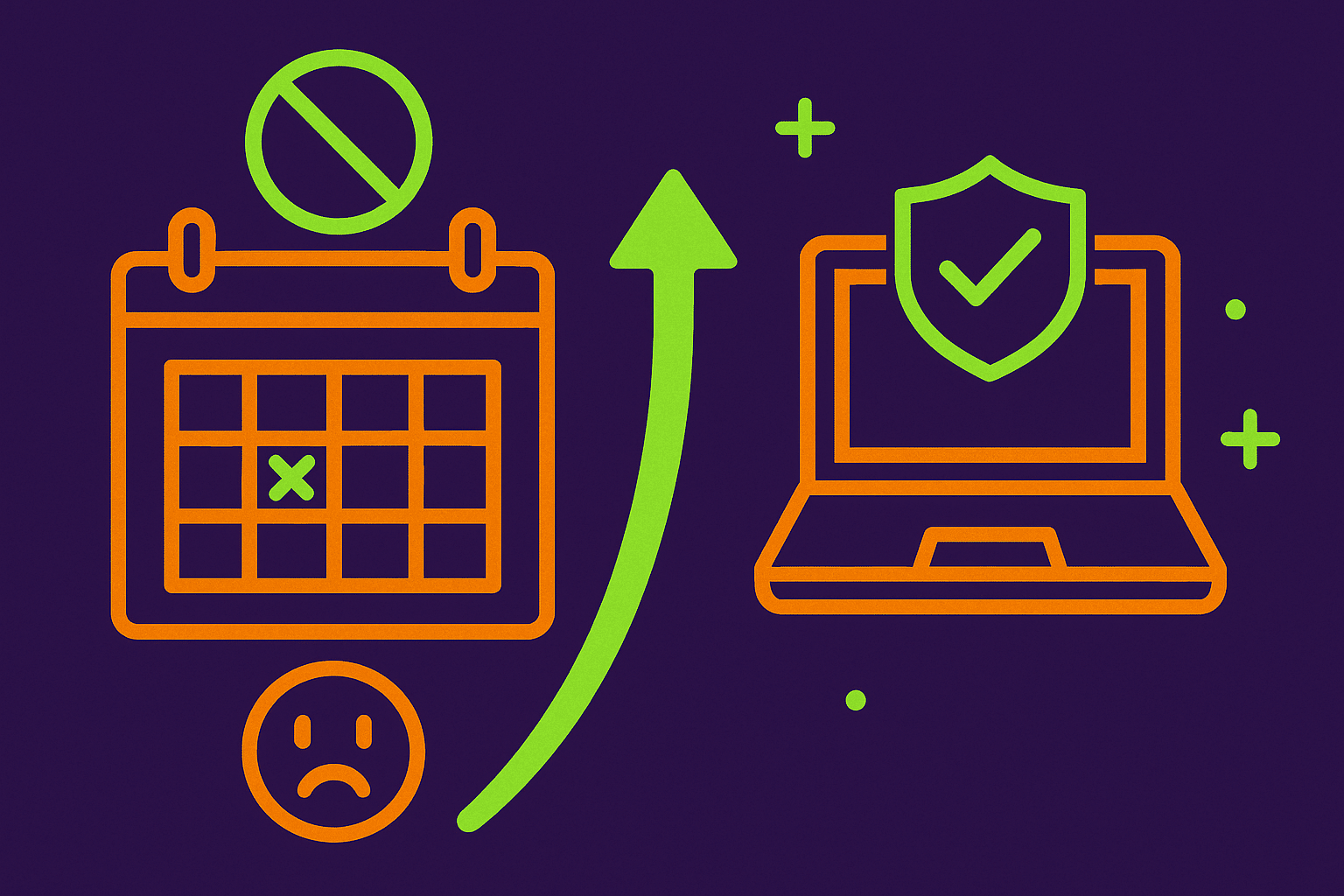
For years, many organizations treated annual penetration testing like a box to check. Schedule the test, receive the report, remediate some issues, and file it away until next year. But today’s cyber threat landscape moves far too quickly for this once-a-year approach to be sufficient. If your only offensive security validation comes in the form of a single annual pen test, you’re leaving wide gaps in your defenses, and attackers know how to exploit them.
Annual penetration testing isn’t bad; it’s simply not enough. To understand why, let’s look at how the world has changed and what organizations should do instead.
The Pace of Threats Has Outgrown Annual Testing
A decade ago, testing once a year provided a reasonable snapshot of your environment. Vulnerabilities emerged more slowly, attackers weren’t as well-resourced, and IT infrastructures were less complex. Fast forward to today, and everything has changed:
- Zero-days and exploit kits emerge weekly. Attackers don’t wait 12 months to test your defenses; they try daily.
- Cloud and SaaS adoption creates constant change. Every new integration, user, or API connection could introduce risk.
- Agile development cycles push new code constantly. If you’re deploying weekly or daily, a once-a-year pen test is already outdated by the time the ink dries.
Simply put: an annual test can’t keep up with the velocity of modern threats.
The Problem with the “Point-in-Time” Mindset
Traditional annual penetration tests are snapshots. They’re valuable for proving compliance or uncovering systemic flaws, but they don’t represent your current attack surface for very long.
Think of it like a medical checkup. A yearly physical might catch issues that have built up over time, but it won’t prevent you from catching the flu next week or breaking your ankle next month. The same is true in cybersecurity; point-in-time assurance doesn’t equal continuous protection.
Attackers Don’t Respect Calendars
Your adversaries aren’t circling the date of your next pen test. They’re looking for the forgotten endpoint, the unpatched application, or the weak password today.
The reality is that:
- Ransomware gangs often strike during off-hours or holiday periods.
- Phishing campaigns launch whenever new lures become available.
- Exploits for new vulnerabilities are weaponized within hours or days of disclosure.
An annual test might tell you “you were secure in March,” but it won’t help you catch an attacker in September.
Where Annual Pen Testing Still Fits
This doesn’t mean annual testing is obsolete. It’s still valuable for:
- Compliance frameworks that mandate it (e.g., PCI DSS, GLBA).
- Baseline assurance to check overall security posture.
- Auditor and client trust, proving you conduct regular independent assessments.
But it should be viewed as the foundation, not the whole program.
What’s Needed: Continuous Assurance
To truly reduce risk, organizations need a strategy that blends annual testing with more frequent and flexible validation methods:
- Quarterly or Semiannual Pen Tests
Shorter, focused tests on critical assets keep defenses validated throughout the year. - Vulnerability Management with Human Validation
Automated scans are helpful, but results should be triaged by experts who can separate noise from actual risk. - Breach and Attack Simulation (BAS)
Automated tools that replay known attacker tactics daily or weekly provide ongoing insight into defensive gaps. - Red and Purple Team Exercises (for larger companies)
These collaborative engagements test detection and response capabilities, ensuring your team can act under pressure. - Threat-Informed Testing
Adjusting test scenarios based on new vulnerabilities, industry-specific threats, or changes in your environment ensures testing always reflects the real world.
Why This Matters for SMBs
Small and mid-sized businesses often think, “We can’t afford continuous testing.” But attackers don’t scale down their ambition just because you have fewer resources. In fact, SMBs are often seen as softer targets.
The good news? Continuous assurance doesn’t have to mean enterprise-level spending. Options like:
- Rotating quarterly tests on different systems,
- Combining vulnerability assessments with occasional deep pen tests,
- Regular monitoring,
…all provide more coverage without ballooning the budget.
The Hidden Risk of Overconfidence
One of the most dangerous phrases in cybersecurity is: “We just had a pen test, we’re probably fine.”
That confidence can blind leaders to the reality of constant change. Your pen test report may have closed one chapter, but new risks emerge every time:
- You hire a new employee.
- You onboard a new vendor.
- You update a piece of software.
The security story is constantly evolving. Without continuous validation, you’re reading last year’s chapter while attackers are writing the next one.
Final Thoughts: Evolve Beyond Annual Testing
Annual penetration testing still has its place, but it can no longer serve as your sole assurance method. The speed of threats, the complexity of environments, and the stakes of breaches necessitate more frequent and adaptable approaches.
For modern organizations, especially SMBs, this means thinking in terms of continuous assurance. Start with the annual test, then layer in vulnerability validation, targeted quarterly reviews, and simulations of real-world attacker tactics.
Because cybersecurity isn’t about proving you were secure once, it’s about proving you’re resilient today, tomorrow, and every day after that.
Next Step
If your organization is still relying only on annual pen tests, it’s time for a reality check. MainNerve can help you build a testing program that fits your budget and keeps pace with real-world threats. Contact us to start your free consultation.