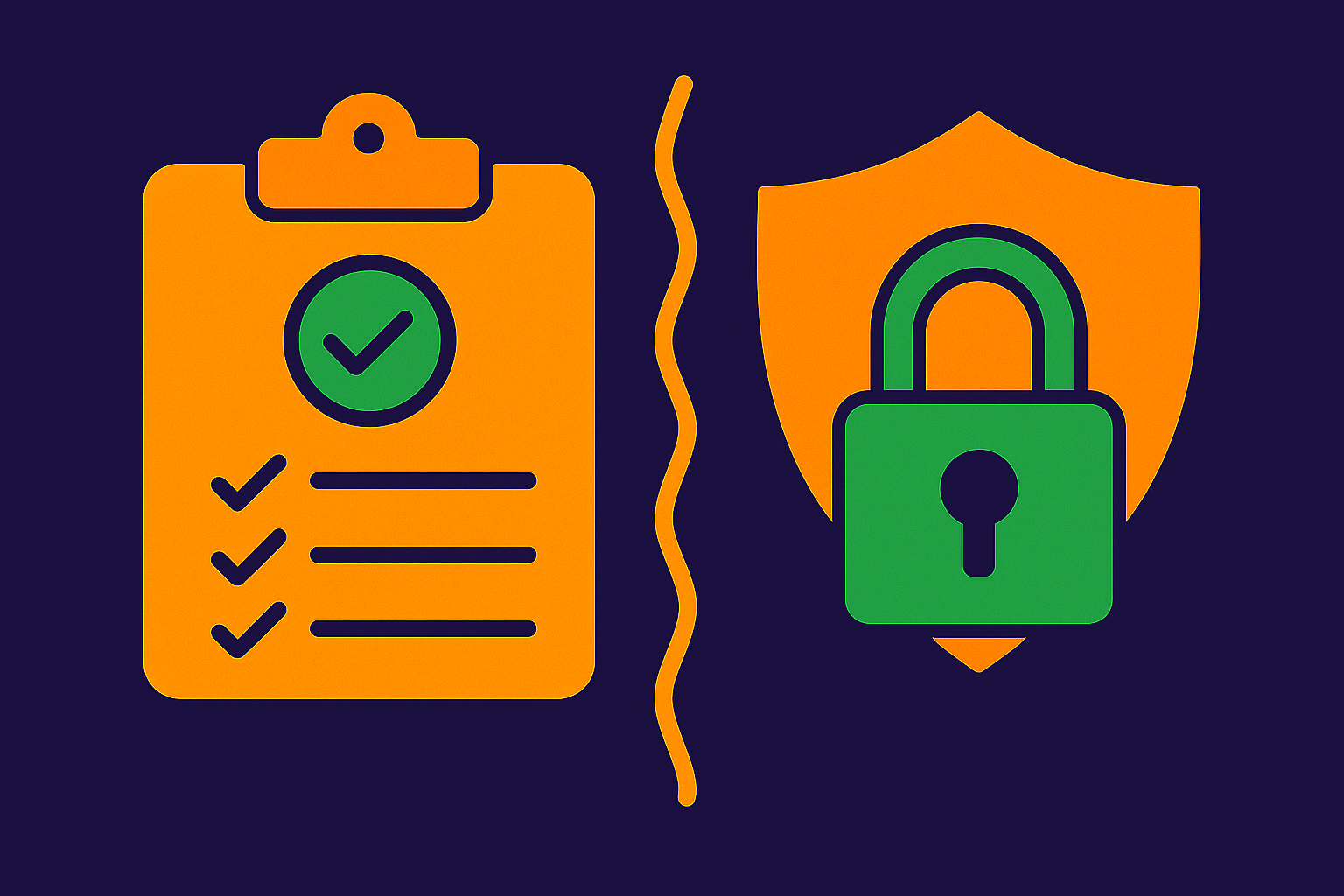
For many small and mid-sized businesses (SMBs), achieving compliance with standards like HIPAA, PCI DSS, or SOC 2 feels like reaching the finish line. After all, auditors sign off, certifications are awarded, and customers gain confidence that the business takes cybersecurity seriously. But here’s the hard truth: compliance doesn’t equal security.
Compliance frameworks are valuable, but they serve as a baseline, not a guarantee that your systems, data, and personnel are safe from real-world attackers. If you stop at compliance, you risk treating security as a checklist instead of the ongoing, dynamic practice it needs to be.
The organizations that thrive in today’s threat landscape recognize compliance for what it is: one piece of a larger security strategy. Let’s break down why compliance doesn’t mean security, and more importantly, how your business can bridge the gap.
Compliance: A Snapshot, Not a Strategy
Compliance audits serve a purpose: they ensure organizations are meeting a minimum set of security and privacy requirements. But audits are static by nature. They represent a snapshot in time. “Were you doing the right things on the day of the audit?”
Attackers don’t operate on compliance timelines. They don’t care if your policies were technically in line with PCI DSS in March when the auditor visited. They exploit vulnerabilities in August, when someone forgot to patch a web server or an employee clicked a phishing link.
The Problem with Checkbox Security
- Static Requirements: Frameworks may lag behind current threats. For example, some regulations still don’t fully address modern attack vectors like multi-factor authentication fatigue attacks.
- Minimalism Mentality: Organizations often do the bare minimum to pass an audit, leaving real-world gaps unaddressed.
- False Sense of Security: Passing an audit may convince leadership they are “secure enough,” when in reality, attackers don’t care about compliance badges.
Security: A Continuous, Risk-Based Practice
True security is not about checking boxes; it’s about reducing risk in an environment where threats constantly evolve. That means building resilience, not just meeting static requirements.
Security involves:
- Continuous Monitoring: Attackers don’t wait until audit season; your defenses need to work 24/7.
- Real-World Testing: Penetration testing, red team exercises, and social engineering simulations validate whether your defenses actually hold up.
- Prioritizing Risk Over Requirements: Not all compliance gaps are equally dangerous, and not all compliance controls map to the biggest threats. Security leaders must identify what really matters for their unique environment.
- Culture and People: Compliance may require annual training, but an authentic security culture means employees understand their role in defending the business every day.
Real-World Examples of the Compliance Gap
1. The “Compliant” Breach: Many companies that suffered headline-making data breaches, from retail giants to healthcare providers, were technically compliant at the time of compromise. Compliance didn’t stop attackers.
2. Encryption in Transit vs. At Rest: Some regulations focus narrowly on protecting data in transit, but fail to emphasize encryption at rest. Attackers know this and exploit it.
3. Vendor Risks: Your vendors might provide you with compliance reports, but that doesn’t mean their systems (or yours, by extension) are truly secure.
How to Bridge the Gap Between Compliance and Security
If compliance is your foundation, security is the structure you build on top of it. Here’s how SMBs can bridge the gap:
1. Go Beyond the Checklist
Don’t just ask, “Do we meet the requirement?” Ask, “Does this actually protect us against real threats?” Treat compliance controls as a starting point, not the end goal.
2. Invest in Penetration Testing
Compliance audits rarely replicate the creativity of attackers. Penetration testing does. A good pen test reveals how vulnerabilities chain together and what an attacker could actually achieve, information that an audit checklist won’t provide.
3. Prioritize Risk Management
Build a security strategy that prioritizes the most critical risks to your organization. If a compliance requirement doesn’t map to your highest risks, meet it, but focus more energy on the threats that could realistically cause the most damage.
4. Validate Vendors
Your security is only as strong as the weakest link in your supply chain. Go deeper than vendor compliance certifications. Ask for evidence of testing, third-party assessments, and remediation practices.
5. Build a Security-First Culture
Annual training might satisfy compliance, but ongoing awareness is what actually keeps your business safe. Teach employees how to recognize phishing attempts, report suspicious activity, and understand the importance of their role in security.
6. Treat Compliance as a Milestone, Not the Goal
Passing an audit is important, but don’t mistake it for the end of the journey. Instead, think of compliance as validation that you’ve built a foundation; now keep building.
The Bottom Line
Compliance will always play a crucial role in demonstrating due diligence and meeting regulatory or contractual requirements. But confusing compliance with security is a dangerous trap, especially for SMBs with limited resources.
Compliance can help you meet the letter of the law. Security ensures you can survive in the real world. The organizations that succeed treat compliance as the floor, not the ceiling, and focus on building a culture of security that adapts to evolving threats.
Ask yourself this: Are you securing your business, or just passing the test?
Ready to move beyond checklists and see where your real risks are? Schedule a penetration test with MainNerve and get actionable insights that compliance alone can’t provide.